Stop Fighting Your Old Blow Molding Machines
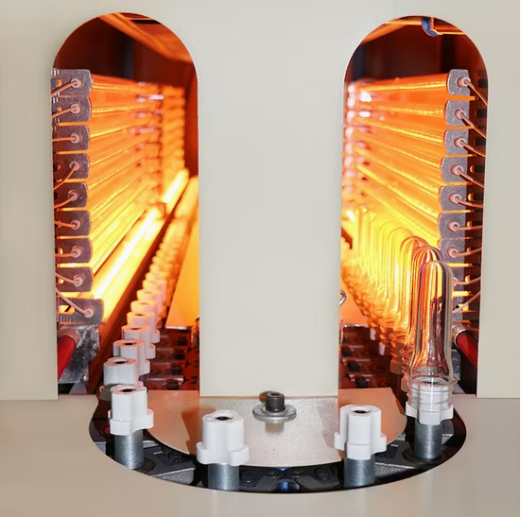
If you’re running a mid-sized operation, you probably have a blow molding machine that’s seen better days. You know the feeling: you’re trying to hit your cycle times, but the machine just isn’t keeping up. You start seeing those annoying “cold spots” in the preforms, and suddenly your bottles are coming out deformed. It’s frustrating. But before you go spending a fortune on a brand-new machine, there’s a much simpler fix. We’ve found that just swapping out your old heating elements for high-density infrared (IR) modules can bring an old line back to life. It’s the fastest way to get your productivity back without breaking the bank. The secret is all about heat density. To speed things up, you need to jam more energy into that PC or PET preform in a shorter window of time. We build our modules to handle higher wattages—usually 220V or 380V, depending on what your plant is wired for. When you increase the wattage, you increase the radiant heat. The plastic reaches that sweet spot for molding way faster. Once that happens, you can either shorten your oven length or just crank up the conveyor speed. It’s a win-win. The nitty-gritty stuff We use a specific kind of coated quartz glass. Why? Because it shifts the emission spectrum. In plain English: the heat actually sinks into the plastic instead of just scorching the surface. And don’t worry about the installation. Most of our modules use R7s or Sk15 connectors. They’re basically drop-in replacements. They handle the constant expanding and contracting of the heat without popping out of the socket, so you aren’t constantly fiddling with them. A few things to watch out for Now, a high-output module isn’t a magic wand. You have to be smart about it. If you bump up the wattage to push more bottles per hour, you’re putting more heat into the machine. Your cooling fans need to be able to pull that extra heat away from the frame. If your ventilation is too weak, you risk overheating your electronics or warping your reflectors. That’s a headache you don’t want. Also, check your power draw. If you’re switching from a low-wattage lamp to a high-density IR tube, your old breakers and wiring might not be up to the task. Just take a second to verify your amperage limits before you flip the switch.