Role
Jste zkušený rodilý lokalizační překladatel do češtiny s odbornými znalostmi v průmyslové výrobě a elektromechanice.
Task
Přeložte níže uvedený technický článek do češtiny s co nejvyšší úrovní odborné přesnosti.
Input Text
You know the drill on the blow molding floor. Halogen lamps start dimming, heating profiles drift, and you spend more time chasing temperature than actually running the machine. When your Sidel or Krones blow molder starts burning through lamps and power, the maintenance logs pile up fast. The question isn’t whether to upgrade—it’s how to do it without breaking the budget.
What matters under the hood
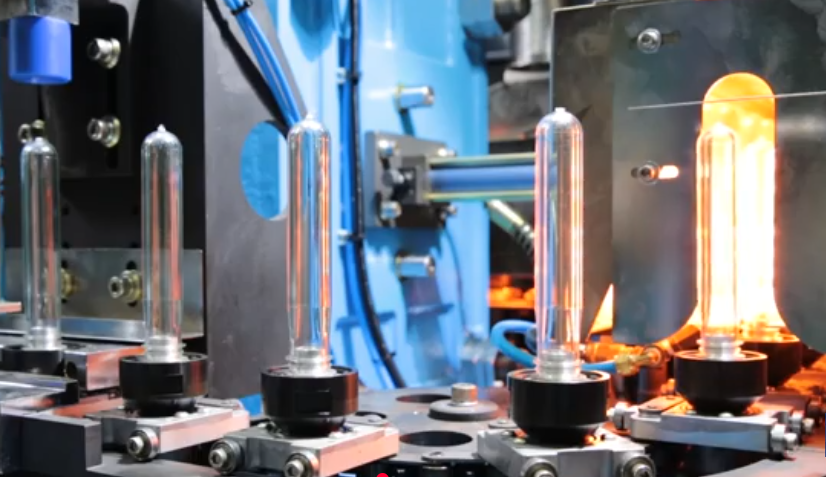
Near-infrared (NIR) emitters heat preforms differently than halogen. They don’t throw energy across the spectrum; they concentrate it where PET absorbs best. The result is faster response and tighter control over the heating band. Typical NIR replacements run on 120–240 V, drop into standard R7s sockets, and pack serious power density into a small footprint. Fewer lamp changes per year. Lower kWh per cycle. In practice, that means less downtime and a more stable profile across the heating tunnel.
Why it clicks on the line
On a high-speed stretch blow molding line, heating stability drives uptime and yield. With NIR, you can shorten the heating tunnel, back off the heat at the neck, and hit the set profile faster. That means lower energy bills, fewer rejects, and a process window that behaves itself. When you swap halogen for NIR on Sidel, Krones, SIPA, Husky, SACMI, or Nissei ASB machines, you get 1:1 parameter matching to OEM specs—so the upgrade fits without rewiring the whole oven.
The fine print
NIR isn’t a straight plug-and-play in every case. Reflectors, airflow, and preform color all shift the outcome, and some older tunnels need minor geometry tweaks to keep the beam pattern even. Run a trial first. Map your existing heating curve. Confirm the lamp length and connector type match your holder. Once the profile is locked in, you’ll see fewer lamp changes—and a clearer runway to lower operating cost.
Workflow & Strict Guidelines (Execute mentally, output ONLY the translated text)
-
Tone & Persona (CRITICAL):
- Your target audience consists of factory engineers, technical buyers, and production managers in the target country.
- The tone must remain strictly objective, rigorous, factual, and direct.
- ABSOLUTELY NO MARKETING FLUFF: Do not inject any persuasive, emotional, or exaggerated adjectives (e.g., perfect, ultimate, revolutionary, best) into the translation. Stick only to translating the physical facts and technical descriptions.
-
Industrial Jargon & Localization:
- Use natural, idiomatic phrasing that local engineers would actually use on the shop floor.
- Ensure a fluid translation that conveys the exact meaning. Do NOT use rigid, word-for-word machine translation.
-
Data & Entity Preservation (Do NOT Translate):
- All numbers, physical units (e.g., W, V, mm, ℃, Hours), and specific model codes/SKUs (e.g., R7s, SK15, IR, PET) must be kept exactly as they are in the source text.
- Do NOT convert measurement units (e.g., do not change mm to inches).
- Keep brand names or designated English proper nouns in English.
-
Formatting Integrity:
Output format
Output the final translated text in Czech directly. Do NOT include any introductory, explanatory, or conversational text. Do NOT wrap the output in Markdown code blocks (like ```).
You know the drill on the blow molding floor. Halogen lamps start dimming, heating profiles drift, and you spend more time chasing temperature than actually running the machine. When your Sidel or Krones blow molder starts burning through lamps and power, the maintenance logs pile up fast. The question isn’t whether to upgrade—it’s how to do it without breaking the budget.
What matters under the hood
Výboje valcování PET nebo jiné typy vytlačování plastů dobře znají: halogenové lampy začínají slábnout, profily vytápění se posouvají, a místo řízení stroje řešíte hlavně teplotní nestability. Když vaše stroje Sidel nebo Krones ve výrobě foukaných lahví začnou rychle spotřebovávat lampy a energii, záznamy o údržbě se rychle hromadí. Otázka není, jestli vyměnit, ale jak upgrade provést bez překročení rozpočtu.
What matters under the hood
Vyzařovače v blízkém infračerveném spektru (NIR) ohřívají předformy jinak než halogenové lampy. Nepřenášejí energii přes celé spektrum, ale koncentrují ji tam, kde PET nejlépe absorbuje. Výsledkem je rychlejší odezva a přesnější kontrola tepelného pásma. Typické NIR náhrady pracují na napětí 120–240 V, zasouvají se do standardních patic R7s a poskytují vysokou hustotu výkonu na malém prostoru. Výsledkem je méně výměn lamp za rok a nižší spotřeba kWh na cyklus. V praxi to znamená méně odstávek a stabilnější profil v celé části tunelu vytápění.
Why it clicks on the line
Na vysokorychlostních linkách pro tažení foukaných lahví je stabilita vytápění klíčová pro dostupnost a výtěžnost linky. S NIR lze zkrátit tunel vytápění, snížit teplotu v oblasti hrdla a dosáhnout nastaveného profilu rychleji. To znamená nižší náklady na energii, méně vadných kusů a procesní okno, které se chová předvídatelně. Při výměně halogenových lamp za NIR na strojích Sidel, Krones, SIPA, Husky, SACMI nebo Nissei ASB získáte shodu parametrů 1:1 podle OEM specifikací – tedy upgrade pasuje bez nutnosti přepojování celých topných sekcí.
The fine print
NIR není vždy přímo plug-and-play řešení. Reflektory, proudění vzduchu a barva předformy ovlivňují výsledky, a některé starší tunely vyžadují drobné úpravy geometrie pro rovnoměrné rozložení záření. Doporučuje se nejprve provést test. Naměřte stávající křivku vytápění. Ověřte délku lampy a typ konektoru podle držáku. Jakmile bude profil stabilní, omezí se počet výměn lamp a vytvoří se lepší podmínky pro snížení provozních nákladů.